TECHTONGDA 134187 Mobile Vacuum Hydraulic Oil Filter Car 198462051422 Phase 220V
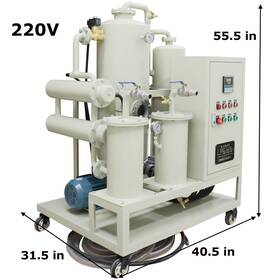
( Brand: Techtongda ), ( Manufacturer Part Number: 134187 ), ( Part Type: Vacuum Hydraulic Oil Filter ), ( Country Of Origin: China ), ( UPC: 198462051422 )
Review TECHTONGDA 220v Industrial Mobile Vacuum Hydraulic Oil Filter Car Three phase
The **Techtongda 134187 220V Mobile Vacuum Hydraulic Oil Filter for Cars** is a high-performance, versatile filtration solution designed to efficiently clean and maintain hydraulic systems in both automotive and industrial applications. Engineered with precision and built to withstand demanding environments, this compact yet powerful vacuum unit operates on a 220V power supply, ensuring reliable performance for tasks ranging from routine oil system maintenance to deep-cycle hydraulic fluid purification. Its three-phase filtration system is specifically tailored to handle a wide range of hydraulic oils, including mineral, synthetic, and biodegradable fluids, making it an ideal choice for automotive workshops, dealerships, and mobile service technicians. The unit features a robust vacuum mechanism that effectively removes contaminants such as metal particles, sludge, water, and other impurities, significantly extending the lifespan of hydraulic components and improving system efficiency. Its portable design allows for easy transportation and on-site use, eliminating the need for costly downtime or relocating vehicles to a stationary filtration station. The Techtongda 134187 is equipped with a high-capacity filtration cartridge that ensures thorough purification, reducing the risk of clogged lines, pump failure, or premature wear on hydraulic systems. Additionally, its user-friendly interface includes clear indicators for oil flow, vacuum pressure, and filtration status, providing real-time feedback to operators. This ensures optimal performance and allows for quick adjustments to maintain peak efficiency. Whether used for routine oil changes, system flushes, or emergency repairs, this vacuum hydraulic oil filter stands out for its durability, efficiency, and adaptability, making it an indispensable tool for professionals who demand precision and reliability in their hydraulic maintenance workflows.
### **Pros and Cons of buying a Techtongda 134187 220V Mobile Vacuum Hydraulic Oil Filter for Cars (Three-Phase)**
#### **Pros:**1. **Versatility** Suitable for multiple applications, including hydraulic oil filtration in cars, machinery, and industrial equipment. The three-phase design suggests compatibility with a range of systems requiring precise filtration.
2. **Efficiency** A vacuum-based filtration system can effectively remove contaminants, improving oil cleanliness and extending the lifespan of hydraulic components. This can reduce maintenance costs and downtime.
3. **Portability** The mobile design allows for on-site filtration, meaning you can clean oil directly at the source without transferring it to a stationary system. This is particularly useful for workshops, fleets, or off-site repairs.
4. **Cost-Effective for Large-Scale Use** If you frequently change or filter hydraulic oil in multiple vehicles or machines, this unit may prove more economical than repeatedly purchasing new oil or relying on single-use filters.
5. **Time-Saving** Automated or semi-automated filtration can speed up the oil change process compared to manual filtering methods, improving workflow efficiency.
6. **Compatibility with 220V Power Supply** The 220V requirement makes it suitable for regions where this voltage standard is common, avoiding the need for additional converters.
7. **Potential for Reusable Filters** Unlike disposable filters, this system may allow for reusable or replaceable filter cartridges, reducing waste and long-term expenses.
---
#### **Cons:**1. **High Initial Cost** Mobile vacuum filtration units are typically more expensive upfront than basic oil filters or manual filtration methods. The cost may not be justified for occasional or small-scale use.
2. **Maintenance Requirements** Like any mechanical system, this unit will require regular maintenance, including cleaning, filter replacements, and potential repairs. Neglecting maintenance could lead to reduced efficiency or system failure.
3. **Learning Curve** Operating a mobile vacuum filtration system may require training, especially if the user is unfamiliar with hydraulic oil filtration processes. Improper use could result in ineffectual cleaning or equipment damage.
4. **Space and Storage Needs** The unit is portable but may still require dedicated storage space when not in use. This could be a limitation for users with tight storage conditions.
5. **Dependence on Power Supply** While the 220V requirement is standard in many areas, it may not be compatible with all locations (e.g., remote job sites without reliable power). A backup power source or generator may be needed.
6. **Filter Quality and Longevity** The effectiveness of the filtration depends heavily on the quality of the filters used. Low-quality filters may not capture fine contaminants, reducing the system s benefits. Additionally, frequent filter changes could add to operational costs.
7. **Limited to Hydraulic Oil** This unit is specialized for hydraulic oil and may not be suitable for other types of lubricants (e.g., engine oil, transmission fluid). Purchasing it for unrelated applications would be a waste of resources.
8. **Potential for Overuse** If the unit is used excessively without proper breaks, it may wear out faster, leading to premature replacement costs.
---
### **Conclusion:**The **Techtongda 134187 220V Mobile Vacuum Hydraulic Oil Filter** is a valuable investment for **businesses, workshops, or individuals who frequently handle large volumes of hydraulic oil and require efficient, on-site filtration**. Its portability, efficiency, and potential cost savings over time make it ideal for professional or high-volume users. However, for **occasional or small-scale users**, the upfront cost and maintenance demands may outweigh the benefits, making traditional oil filters or manual filtration methods more practical.
If you operate a **fleet, heavy machinery, or automotive repair shop**, this unit could significantly enhance your workflow by reducing contamination and extending oil life. For **home use or infrequent oil changes**, it is likely overkill and not cost-effective.
---
### **Recommendation:** - **Buy if:**- You work in an industry where hydraulic oil filtration is critical (e.g., automotive repair, construction, manufacturing).
- You frequently change oil in multiple vehicles or machines and want to minimize downtime and waste.
- You have the space and budget for a specialized filtration system.
- You prioritize long-term cost savings through improved oil cleanliness and extended equipment life.
- **Avoid if:**- You only perform occasional oil changes (e.g., personal vehicle maintenance).
- You lack the technical knowledge or resources to maintain the unit properly.
- Your budget is limited, and you can achieve similar results with cheaper, disposable filters.
- You do not have access to a reliable 220V power source for consistent use.
**Alternative Considerations:**- If your needs are simpler, a **basic hydraulic oil filter cartridge** or a **manual filtration kit** may suffice.
- For larger operations, explore **commercial-grade filtration systems** with higher throughput or automation features.
- Ensure compatibility with your specific hydraulic oil type before purchasing to avoid inefficiency.
Ultimately, this unit is best suited for **professional or industrial applications** where efficiency and scalability are priorities. For most individual car owners, traditional oil changes with standard filters will remain the most practical solution.
Details:
When the pointer of pressure gauge reaches 0.4MPa or so, operator should stop machine, then open Oil Drain Valve beneath Fine Filter, drain all oil, counterclockwise rotate and remove fine filter element, replace it with a new one use. The machine can be widely used for purification and filtration of insulating oil, hydraulic turbine lubricating oil other industrial oils in the mining enterprises such as steel mills, power plants, petrochemical machinery metallurgy enterprises, complies with usage standards high-precision. The vacuum oil filter cart adopts the negative pressure principle and three-dimensional flash evaporation thin-film technology conducts multi-stage precision filtration to remove moisture, gases various impurities from unqualified. Product Display.
The machine should be stored in a dark, dry, dust-free and non-corrosive location. If other types of oil need to be filtered, please flush the machine thoroughly before use, so as prevent cross-contamination. The machine is tested with ordinary used insulating oil before leaving the factory. Hydraulic Oil Filter Cart Portable Waste Bulk 220V.
During operation, the operator should regularly check oil level of vacuum pump maintain at 2/3 indicator. After troubleshooting, rotate the Emergency Stop/Reset button clockwise to release it and restore control power. Most of control components are installed inside the electrical cabinet. Product Features.
The oil level or foam cannot exceed the observation window on gas-liquid separation tower. Then operate the machine in accordance with Working Procedure for Startup again. The machine can work under the conditions that ambient temperature is 10 40 C, humidity 85%, and altitude 2500m.2. Rotate the ''Emergency Stop/Reset button clockwise, and temperature controller displays current real-time.
After the oil inlet and outlet cycle operates normally, press Heater Start button. Take an oil sample from the Sampling Valve for testing. Open the Oil Drain Valve beneath Coarse Filter, drain all oil, and then counterclockwise rotate remove stainless steel coarse filter element for cleaning. The oil delivery efficiency is well ensured.
The temperature controller on the electric control cabinet panel displays current real-time oil temperature, and starts to rise gradually. You can make order with no worry. When sampling is conducted, the container must be cleaned and dried. Frame System, The machine is of a movable frame structure, four casters are installed at the bottom for convenient movement machine, structural stability and convenience well improved, practicability higher.
If the machine is to be stored for a long time, operator should drain all vacuum pump oil, refill with No. After the oil is circulated and filtered, moisture various impurities are gradually filtered away. It features the high water removal efficiency and filtration accuracy, can quickly restore original performance indexes of oil. Operation Method.
In case of emergency, press the Emergency Stop/Reset button. Adjust the opening of Vacuum Regulating Valve. Discharge a small amount of oil before taking the sample for testing. Electric Control System, The control system comprises electrical components, an cabinet and so on, is the centralized of machine.
Oil Delivery System, The oil delivery system comprises an inlet valve, solenoid outlet pump, sampling drain valve and so on, ensures the flows normally. Press the Vacuum Pump Start button, and vacuum gauge on gas-liquid separation tower shows degree inside system. After cleaning, blow the surface dry with compressed air and reinstall coarse filter element. The purity of the oil is higher, and quality better.
The operator should add No. At this moment, oil intake and discharge of the machine are normal, heating system works normally, enters automatic operation state. Product Overview. Vacuum System, The vacuum system comprises a pump, gauge, regulating valve and so on, its function is to extract the moisture gases from oil.
If the oil inlet flow of machine decreases significantly, it indicates that coarse filter element inside has been clogged. Product Parameters. Otherwise, the machine may be damaged.
specifications hydraulivalv:
- brand: Techtongda
- mpn: 134187
- part type: Vacuum Hydraulic Oil Filter
- country of origin: China
- upc: 198462051422
returns hydraulivalv:
- method: Money back
- time: 30 Days
- policy: Returns Accepted
- paid by: Buyer
general hydraulivalv:
- Hydraulics, Pneumatics, Pumps Plumbing > Hydraulic Filters Cartridges > Hydraulic Filters
- condition: New
payments hydraulivalv:
- wallet: Paypal
- credit card: Diners-club
- other
seller hydraulivalv:
- # reviews: 5519
- city: Rancho Cucamonga, California
- rating: 99.8%
offer hydraulivalv:
- started: March 11, 2026
- availability: In Stock
- best offers: True
- quantity: 1
- sold: 0
- options: Ship-to-home
shipping hydraulivalv:
- service: Flat Rate Freight
- class: Freight
- cost: $650.00
- type: Fixed