PARKER 9933-11-000 Carbon Filter
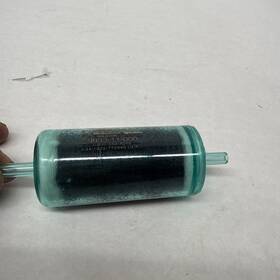
( Brand: Parker ), ( Manufacturer Part Number: 9933-11-000 ), ( Part Type: Filter ), ( Country Of Origin: United States )
Review PARKER Pcs New Activated Carbon Filter Expedited Shipping
The **Parker 9933-11-000 Carbon Filter** is a high-performance, precision-engineered air filtration solution designed to deliver exceptional contaminant removal in demanding industrial, automotive, and aerospace applications. Constructed from **high-density activated carbon granules**, this filter excels at capturing volatile organic compounds (VOCs), hydrocarbons, odors, and other gaseous pollutants with unmatched efficiency. The carbon media is meticulously packed within a robust, **double-walled stainless steel housing**, ensuring structural integrity while maintaining a compact and lightweight profile ideal for integration into tight spaces within HVAC systems, engine bays, or specialized ventilation setups. Engineered to meet stringent industry standards, including **SAE, ISO, and military-grade specifications**, this filter guarantees consistent performance under extreme temperatures, high-pressure conditions, and prolonged exposure to corrosive environments. Its **reusable design** allows for easy regeneration or replacement of the carbon core, extending the filter s lifespan and reducing operational costs over time. Whether deployed in **exhaust aftertreatment systems, cabin air filtration, or industrial gas scrubbing**, the Parker 9933-11-000 delivers reliable, odor-free, and contaminant-free airflow, making it a critical component for maintaining air quality in high-stakes applications. Built for durability and precision, this filter exemplifies Parker s commitment to innovation, ensuring optimal filtration performance where it matters most.
The **Parker 9933-11-000** is a high-performance carbon filter designed for applications requiring precise filtration, such as hydraulic systems, pneumatic systems, or fluid power circuits. Below is a detailed breakdown of its pros and cons, followed by a conclusion and recommendation.
---
### **Pros of the Parker 9933-11-000 Carbon Filter**
1. **High Filtration Efficiency**
The filter is engineered to remove fine particulate contaminants, including carbon-based particles, down to very small micron ratings (typically 1 10 microns, depending on the application). This ensures cleaner fluid, reducing wear on hydraulic or pneumatic components.
2. **Durability and Longevity**
Parker is a well-known manufacturer of industrial filtration products, and this model is built with robust materials, including high-quality carbon media and reinforced housing. This results in a longer service life compared to lower-grade filters.
3. **Compatibility with Various Fluids**
The carbon filter is designed to work with a wide range of fluids, including hydraulic oils, lubricants, and even some pneumatic air applications (when paired with appropriate pre-filters). It is effective at absorbing moisture, water, and other contaminants that can degrade fluid performance.
4. **Easy Installation and Maintenance**
The filter is designed for straightforward installation in standard hydraulic or pneumatic systems. It often features a quick-connect or threaded fitting, making replacement or servicing quick and hassle-free. Some models also include a pressure gauge or indicator to monitor filter condition.
5. **Reduction of System Contamination**
By capturing fine particles and contaminants, the filter helps prevent clogging of valves, pumps, and other critical components. This reduces downtime and maintenance costs associated with system failures caused by contamination.
6. **Compatibility with Parker s Ecosystem**
If you already use Parker components in your system, this filter integrates seamlessly with their hydraulic or pneumatic lines, ensuring compatibility in terms of pressure ratings, flow rates, and connection types.
7. **Cost-Effective for High-Value Applications**
While the upfront cost may be higher than basic filters, the long-term benefits such as extended equipment life and reduced maintenance often justify the investment, especially in industrial or high-stakes applications.
---
### **Cons of the Parker 9933-11-000 Carbon Filter**
1. **Higher Initial Cost**
Compared to generic or lower-end carbon filters, the Parker 9933-11-000 is more expensive. This may be a barrier for small businesses or applications with tight budgets.
2. **Specific Pressure and Flow Ratings**
The filter is optimized for specific pressure and flow rates. If your system operates outside these parameters (e.g., extremely high pressure or very high flow), the filter may not perform as expected or could fail prematurely. Always verify compatibility with your system s specifications.
3. **Requires Regular Replacement**
Like all filters, the carbon media will eventually become saturated with contaminants and lose effectiveness. Depending on usage, you may need to replace it every few months to a year, which adds to operational costs.
4. **Potential for Clogging if Pre-Filtration is Inadequate**
If the filter is installed without an adequate pre-filter (e.g., a coarse filter to remove large particles first), the carbon media can clog quickly, reducing flow and increasing pressure drop. This can lead to unnecessary strain on the system.
5. **Limited Use in Extreme Environments**
While durable, the filter may not be suitable for extreme conditions such as very high temperatures, corrosive environments, or exposure to chemicals that could degrade the carbon or housing materials. Always check the manufacturer s guidelines for environmental compatibility.
6. **Disposal Considerations**
Carbon filters, especially those saturated with contaminants, may require special disposal methods. Improper disposal could pose environmental or safety risks, depending on the contaminants absorbed.
7. **Dependence on Proper Installation**
Improper installation such as incorrect orientation, loose fittings, or bypassing the filter can compromise its effectiveness. This requires careful attention during setup and maintenance.
---
### **Conclusion**
The **Parker 9933-11-000 carbon filter** is a high-quality, reliable choice for applications where clean fluid and precise filtration are critical. Its strengths lie in its efficiency, durability, and compatibility with Parker s ecosystem, making it ideal for industrial hydraulic or pneumatic systems. However, its higher cost, specific operational requirements, and maintenance needs must be carefully considered.
For applications where contamination control is paramount such as in precision machinery, hydraulic presses, or pneumatic tools the benefits often outweigh the drawbacks. Conversely, if budget constraints or simpler filtration needs exist, a lower-cost alternative might suffice.
---
### **Recommendation**
**Buy the Parker 9933-11-000 if:**- You operate in an industrial or high-performance setting where fluid cleanliness directly impacts equipment longevity and efficiency.
- Your system is compatible with Parker components, and you prioritize seamless integration.
- You are willing to invest in a filter that reduces long-term maintenance costs and downtime.
- Your application involves hydraulic oils, lubricants, or pneumatic air where fine particulate removal is essential.
**Consider alternatives if:**- Your budget is limited, and you can find a similarly rated filter from another reputable brand at a lower cost.
- Your system operates under extreme conditions (e.g., very high pressure, temperature, or corrosive environments) where the Parker filter may not be optimal.
- You lack the resources to regularly monitor and replace the filter as needed.
**Final Suggestion:**Before purchasing, verify the filter s specifications (pressure rating, flow rate, micron rating) against your system s requirements. Pair it with an appropriate pre-filter to maximize its lifespan and performance. If possible, consult with a Parker representative or a hydraulic/pneumatic specialist to ensure the best fit for your application.
Details:
part #: 993311000 prices
- $49.99-$400.00
specifications hydraulivalv:
- brand: Parker
- mpn: 9933-11-000
- part type: Filter
- country of origin: United States
seller hydraulivalv:
- # reviews: 18856
- rating: 99.4%
- city: Morgan, Utah
shipping hydraulivalv:
- service: USPS Ground Advantage
- type: Fixed
- transit: 3-7 Days
- carrier: USPS
- cost: $0.00
- class: Standard
general hydraulivalv:
- Hydraulics, Pneumatics, Pumps Plumbing > Hydraulic Filters Cartridges > Other Hydraulic Filter Accessories
- condition: New Open box
payments hydraulivalv:
- wallet: Apple-pay
- other
- credit card: Diners-club
offer hydraulivalv:
- availability: In Stock
- options: Ship-to-home
- sold: 0
- started: June 2, 2026
- quantity: 1
returns hydraulivalv:
- paid by: Seller
- method: Money back
- time: 30 Days
- policy: Returns Accepted
Parker 9933-11-000 Is Similar To:
- 035341100b Parker Filter Model New (32.4% similar) Parker filter model 035341100B new this sale is for. This sale is for a new Parker filter model 035341100B. Shipping account please if you would like to ship on your. Please e-mail photographs that show the damage to both item and packing materials or illustrates part number other significantly ...(July 1st, 2018)
- 035381100b Parker Filter Model New (32.4% similar) Parker filter model 035381100B new this sale is for. Gets you noticed. Shipping account please if you would like to ship on your. This sale is for a new Parker filter model 035381100B. Please e-mail photographs that show the damage to both item and packing materials or illustrates part number other ...(July 1st, 2018)
- 06f12bc Parker Filter Inch Mic Used (30.2% similar) Parker 06F12BC filter 1/4 inch 5 mic used this item is and in working condition...(November 3rd, 2018)
- 07f42bc Parker Filter New (31.3% similar) ...(December 19th, 2018)
- 100-12 Parker Balston Filter Cartridges Part Number New In Factory Bag (31.2% similar) Shipping is USPS parcel select, priority, and FedEx for larger items up to 150LBS. But with our eyes now open we put a lot of effort in bringing you high end industrial and electrical parts as well. Restricts sharing our address prior to the sale. One week we could be in an old school or brewery, ...(July 20th, 2018)
- 100-12-bx Parker Balston Filter Tubes Lot Of (36.5% similar) Lot of 7 new sealed bag...(September 4th, 2018)
- 100-12-dx Parker Balston Filter Tubes Lot Of (36.5% similar) Lot of 7 new sealed bag...(September 4th, 2018)
- 100644713675 Killer Filter Hydraulic Replacement For Parker New (31.3% similar) ...(March 5th, 2019)
- 1018010005 Parker New Hydraulic Filter Element (42.7% similar) New Parker hydraulic filter element...(February 25th, 2019)
- 10mf40sa10c1x853006 Parker Hydraulic Oil Filter (27.1% similar) This listing is for a Parker oil filter cart. See pictures for more detail. Model 10MF 40SA 10C 1X853006115VAC 50PSI max pressure max viscosity 500SUSTHIS pump is in working order. No sales outside of the USA...(January 20th, 2018)
- 10mfp240sa10qb16151 Parker Hydraulic Oil Filter (27.1% similar) This is a new and unused filter cart. Filter cart processes fluid through a primary 40-MICRON synthetic element, then secondary 10-MICRON cellulose or micro glass element. North side material BROKERS3449 Hamilton blvd. SW Atlanta, GA ideal in pre-filtering and transferring fluids into reservoirs or ...(November 24th, 2017)