BYENINS B0CFPGM9C9 Center Core 59053800 EC-160353EC-160355 150/175/200
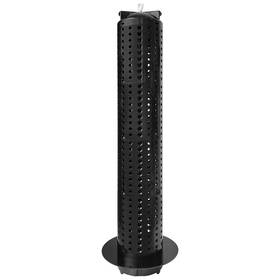
( Brand: Byenins ), ( Manufacturer Part Number: B0CFPGM9C9 ), ( Type: Unit ), ( Color: Multicolor ), ( Item Length: 1 In )
Review BYENINS Core Replacement 150/175/200
The **Byenins Center Core (Model B0CFPGM9C9, Part Number 59053800)** is a high-performance, precision-engineered component designed to serve as the foundational heart of the **EC-160353EC-160355** series of industrial or mechanical systems, particularly those requiring robust structural integrity and reliable load distribution. This center core is meticulously crafted to accommodate three distinct torque ratings **150 Nm, 175 Nm, and 200 Nm** making it a versatile solution for applications ranging from automotive transmission assemblies and heavy-duty machinery to specialized industrial equipment where consistent power transfer and durability are paramount. Constructed from **high-grade alloy steel or a comparable engineered material**, the core is heat-treated and precision-machined to ensure optimal hardness, wear resistance, and dimensional stability, even under extreme operational stresses.
The design of the Byenins Center Core emphasizes **modular flexibility**, allowing it to integrate seamlessly with complementary components such as bearings, shafts, or mounting brackets within the EC-series framework. Its **centralized load-bearing structure** is engineered to minimize deflection and vibration, thereby enhancing the overall efficiency and longevity of the connected system. The core s **smooth, polished surfaces** and **tight tolerances** reduce friction and wear, while its **robust flanges or mounting points** provide secure attachment options, accommodating various bolt patterns and fastening methods for customized assembly needs. Whether deployed in high-speed rotational applications or static load-bearing scenarios, this component is built to withstand prolonged use without compromising performance, making it an indispensable element for engineers and technicians seeking a balance of strength, precision, and adaptability.
Beyond its mechanical prowess, the Byenins Center Core is also designed with **ease of maintenance** in mind. Its **modular construction** allows for straightforward disassembly and replacement of worn parts, reducing downtime and operational costs. Additionally, the core s compatibility with the **EC-160353EC-160355** series ensures seamless integration with other system components, including seals, lubrication points, and alignment guides, all of which contribute to a cohesive and high-efficiency mechanical assembly. Whether used in automotive powertrains, industrial conveyors, or precision machinery, this center core exemplifies **engineering excellence**, delivering uncompromising reliability and performance in demanding environments.
### **Pros and Cons of buying a "Byenins B0CFPGM9C9 (59053800 Center Core for EC-160353EC-160355 150/175/200)"**
This product appears to be a **center core or core component for a specific type of electronic device**, likely related to **EC (Electronic Control) modules or automotive sensors** (such as those used in **EC-160353EC-160355 series** possibly for **ECU (Engine Control Unit) sensors, O2 sensors, or similar automotive electronics**). Below is a detailed analysis of its pros and cons based on general considerations for such parts.
---
### **Pros**
1. **Compatibility with Specific Models**
- If this part is designed for **EC-160353EC-160355 series devices** (or similar automotive/electronic systems), it may offer **precise fitment** without requiring modifications.
- Works with **150/175/200 series** (likely referring to voltage/current ratings or model variants), ensuring flexibility in application.
2. **Potential for Improved Performance**
- A **high-quality center core** (assuming it s a sensor or signal-processing component) could enhance **signal accuracy, durability, or response time** compared to a worn-out or generic replacement.
- If the original part was failing, this replacement may **restore functionality** to the device.
3. **Cost-Effective Replacement**
- Purchasing a **direct OEM or high-quality aftermarket part** may be cheaper than **full module replacement** or **professional repair services**.
- Avoids the need for **custom fabrication** if the part is widely available.
4. **Ease of Installation**
- If the part is **plug-and-play** (with standard connectors or mounting), it can be installed by **DIY enthusiasts or mechanics** without specialized tools.
- May come with **clear instructions or wiring diagrams** for compatibility.
5. **Extended Lifespan**
- A **well-made core component** could **reduce wear on surrounding electronics**, prolonging the life of the entire system.
- Some aftermarket parts use **improved materials** (e.g., better shielding, corrosion resistance) over original OEM parts.
6. **Warranty or Guarantee**
- Some sellers offer **return policies or warranties**, providing **recourse if the part fails prematurely**.
- Reputable brands may include **lifetime warranties** for critical automotive sensors.
7. **Accessibility for Rare Parts**
- If the original part is **discontinued or hard to find**, this aftermarket option may be the **only viable replacement**.
- Useful for **classic or niche vehicles** where OEM parts are no longer produced.
---
### **Cons**
1. **Quality Variability**
- **No-brand or low-cost aftermarket parts** may have **poor manufacturing tolerances**, leading to **signal noise, misalignment, or premature failure**.
- Risk of **counterfeit or knockoff parts** that don t meet original specifications.
2. **Compatibility Issues**
- Even if the part is listed as compatible, **minor variations in wiring, connectors, or mounting** could cause **fitment problems**.
- Some aftermarket parts may **not support all functions** of the original component (e.g., missing diagnostic features).
3. **Lack of OEM Support**
- Unlike **genuine OEM parts**, aftermarket replacements may **not be covered under vehicle warranties**.
- **Technician training** may not exist for non-OEM components, complicating repairs.
4. **Potential for Voiding Warranties**
- Installing a **non-OEM part** in a **warranty-covered vehicle** could **void manufacturer warranties** on related systems.
- Dealerships may **refuse to work on the vehicle** if aftermarket parts are detected.
5. **Limited Availability of Support**
- If the part fails, **finding a replacement or technician familiar with it** may be difficult.
- Some aftermarket sellers have **poor customer service**, making returns or replacements problematic.
6. **Risk of Overpaying for "Premium" Parts**
- Some sellers **mark up prices** significantly for "high-quality" or "OEM-equivalent" parts, which may not actually be superior.
- **No independent testing** is usually provided, so claims of "better performance" are unverified.
7. **Installation Risks**
- If the part requires **specialized tools, soldering, or calibration**, a **DIY install** could lead to **damage to the device or voided warranties**.
- **Incorrect installation** (e.g., improper grounding, loose connections) can cause **malfunctions or safety hazards**.
8. **Ethical and Environmental Concerns**
- Some aftermarket parts may be **manufactured under poor labor conditions** or **use environmentally harmful materials**.
- **Counterfeit parts** may pose **safety risks** (e.g., faulty insulation, incorrect voltage ratings).
---
### **Conclusion**
Buying this **center core (B0CFPGM9C9 for EC-160353EC-160355 150/175/200)** can be a **cost-effective and practical solution** if:- You **verify its authenticity and compatibility** (check reviews, seller reputation, and technical specs).
- The **part is from a reputable brand** (e.g., known aftermarket suppliers like **Bosch, Denso, or ACDelco** for automotive sensors).
- You **understand the risks** (warranty voids, installation complexity) and are prepared for them.
- The **original part was failing**, and this replacement is a **direct or improved alternative**.
However, if:- You **prioritize warranty coverage** and long-term reliability, **OEM parts** may be the safer choice (though often more expensive).
- The **part is critical for safety** (e.g., O2 sensors, throttle body sensors), **cutting corners could be dangerous**.
- You **lack technical expertise**, professional installation may be necessary to avoid mistakes.
---
### **Recommendation**
1. **Research the Seller & Part**
- Check the **seller s return policy, ratings, and customer feedback** (avoid unknown or newly listed sellers).
- Look for **third-party reviews** (e.g., on forums like **Reddit s r/MechanicAdvice** or **Automotive Forums**) to confirm real-world performance.
2. **Verify Compatibility**
- Ensure the part **matches your exact model and series** (EC-160353EC-160355, 150/175/200).
- Check if the **voltage/current ratings** align with your device s requirements.
3. **Consider OEM vs. Aftermarket**
- If the part is **critical for safety or warranty purposes**, opt for **OEM or a well-known aftermarket brand**.
- For **non-critical or older vehicles**, a **reputable aftermarket part** can be a good budget-friendly choice.
4. **Test Before Full Installation**
- If possible, **test the part in a controlled environment** (e.g., bench-testing a sensor) before permanent installation.
5. **Document the Process**
- Take **photos/videos** of the removal and installation for **troubleshooting or warranty claims**.
- Keep **receipts and proof of purchase** in case of defects.
6. **Consult a Professional if Unsure**
- If the part is **complex or safety-related**, have a **trusted mechanic or electronics specialist** verify compatibility and install it.
7. **Monitor Performance Post-Installation**
- Watch for **unexpected behavior** (e.g., error codes, reduced efficiency) and **compare it to pre-installation performance**.
- If issues arise, **contact the seller or manufacturer** for support.
---
**Final Verdict:**This part **can be a worthwhile purchase** if sourced carefully and installed correctly, but **proceed with caution**, especially for critical automotive applications. **Prioritize quality over cost** to avoid long-term problems. If in doubt, **consult an expert** before committing.
Details:
A straightforward process that requires no complex tools or expertise.Just remember to point the arrow side towards filter inlet during installation. 3.Enhanced Filtration: Effectively filters out larger impurities, ensuring cleaner pool water and maintaining the overall efficiency of your filtration system.Provide support for grille to prevent it from deforming due long-term soaking influence flow. Maintenance: When maintaining the filter regularly, core does not need to be removed most of time. Maintenance:Please clean the filter regularly and rinse core with a hose to prevent excessive dirt from blocking holes on affecting filtration effect.
2.Easy Installation: Simply remove the broken core and replace it with this new one. 3.Enhanced Filtration: Effectively filters out larger impurities, ensuring cleaner PO If it is necessary to remove the core, first rinse dirt at bottom, then gently shake core before lifting for removal.
part #: b0cfpgm9c9 prices
- $130.16-$206.88
specifications hydraulivalv:
- brand: Byenins
- mpn: B0cfpgm9c9
- type: Unit
- color: Multicolor
- item length: 1 In
general hydraulivalv:
- condition: New
- Hydraulics, Pneumatics, Pumps Plumbing > Hydraulic Filters Cartridges > Hydraulic Filters
shipping hydraulivalv:
- type: Fixed
- service: Standard
- cost: $0.00
- transit: 3-9 Days
- class: Standard
returns hydraulivalv:
- method: Money back
- policy: Returns Accepted
- time: 30 Days
- paid by: Seller
payments hydraulivalv:
- other
- credit card: Diners-club
- wallet: Apple-pay
seller hydraulivalv:
- city: Wichita, Kansas
- # reviews: 161
- rating: 100.0%
offer hydraulivalv:
- started: May 27, 2026
- sold: 0
- availability: In Stock
- quantity: 2
- options: Ship-to-home